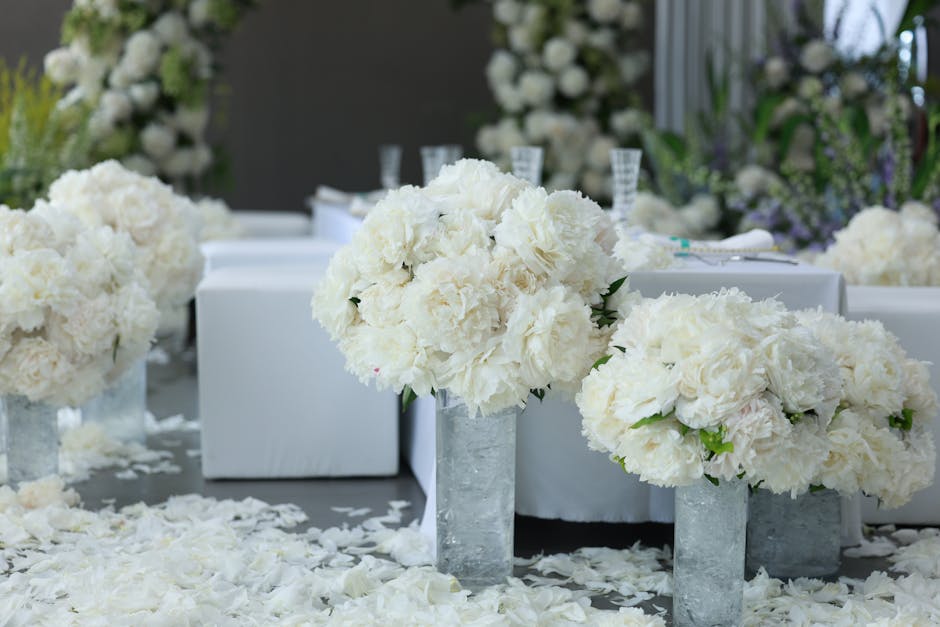
Wedding Florist Licences in Marylebone: Venue Requirements
Posted on 25/09/2026
If you are planning flowers for a wedding in central London, the phrase Wedding Florist Licences in Marylebone: Venue Requirements can sound more complicated than it really is. Most couples are not asking for a legal deep-dive. They just want to know whether their florist can deliver, install, and work at the venue without a last-minute hiccup. Fair enough. In Marylebone, where venues can be historic, compact, and tightly managed, the small print matters. A lot.
This guide explains what venue requirements usually mean, why they matter, how florists handle them, and what you should check before the wedding day. You will also find a step-by-step process, practical red flags, a comparison table, and a checklist you can actually use. If you are balancing style, timing, access rules, and a hundred other wedding details, this should make things feel calmer.
Quick takeaway: In Marylebone, the florist's job is not just to create beautiful arrangements. It is to deliver them safely, on time, and in line with venue rules, access restrictions, and any building or event-management requirements. That part is easy to forget until the loading bay is blocked and everyone is standing around with buttonholes in hand.
Table of Contents
- Why venue requirements matter in Marylebone
- How the process works
- Key benefits and practical advantages
- Who needs this and when it makes sense
- Step-by-step guidance
- Expert tips for better results
- Common mistakes to avoid
- Tools, resources and recommendations
- Law, compliance, standards, or best practice
- Options, methods, or comparison table
- Case study or real-world example
- Practical checklist
- Conclusion
- Frequently asked questions
Why Wedding Florist Licences in Marylebone: Venue Requirements Matters
The word "licence" can mean different things in wedding floristry, and that is where confusion often starts. Sometimes people mean a venue's permission rules for suppliers. Sometimes they mean insurance, public liability cover, or compliance documents a florist may need to show before being allowed on site. Occasionally they mean all of that at once. In real life, venues often care less about the label and more about the paperwork and the behaviour behind it.
Marylebone is especially sensitive to this because many wedding spaces in the area sit inside busy streets, period buildings, private estates, or managed event venues. That means deliveries may need to fit a narrow window, use a specific entrance, avoid certain lifts, or protect surfaces that are expensive and easily marked. A florist who understands those requirements is not just being careful; they are making the whole day smoother.
You will notice that good venue coordination saves stress in the small moments. The flowers arrive before guests start drifting in. The aisle arrangement does not block fire exits. The buttonholes are in the right box, not buried under wrapping paper and ribbon. It sounds obvious, but you only need one overlooked detail to turn a calm morning into a scramble.
There is also a trust factor. Venues tend to work more comfortably with florists who understand access rules, risk awareness, and event etiquette. That can influence whether your setup is quick and clean or slow and awkward. And let's face it, nobody wants to hear, five minutes before the ceremony, that the delivery van cannot stop where everyone assumed it could.
How Wedding Florist Licences in Marylebone: Venue Requirements Works
The practical side usually begins with the venue's supplier information. Some venues ask florists to complete a registration form, send insurance documents, confirm delivery times, or agree to house rules. Others simply share a supplier pack or event brief. In more formal settings, especially where there is tight security or shared access, the venue may require proof of public liability insurance, risk assessment details, and named contact information for the wedding day.
For a wedding florist, this is less about bureaucracy for its own sake and more about proving they can operate safely and professionally. A venue might want to know:
- who is delivering the flowers
- what time the delivery will happen
- how the florist will access the building
- whether vehicles can unload nearby
- what happens if there is a delay
- whether installation involves stands, candles, tools, or water sources
Some venues also have rules about adhesives, confetti, open flame, chilled storage, and preservation of floors or walls. If the installation involves elaborate ceremony arches or table dressing, the florist may need a bit of extra coordination. In our experience, the less glamorous the logistics look, the more important they become. Strange but true.
For couples, the key thing is to ask early. Do not wait until the week of the wedding to find out whether the florist needs a lift booking, a security pass, or a particular unloading route. In Marylebone, where timing can be tight and space limited, those last-minute surprises are the enemy of a relaxed morning.
Key Benefits and Practical Advantages
When venue requirements are handled properly, the benefits go well beyond compliance. You get better timing, better presentation, and fewer moving parts to worry about. That matters in wedding floristry because flowers are often one of the last things to be installed and one of the first things people notice.
- Smoother setup: The florist arrives prepared for the building layout, delivery route, and access restrictions.
- Less risk of damage: Venues are often protective of carpets, walls, antiques, or polished surfaces.
- Better flower condition: A well-planned delivery means arrangements spend less time sitting in heat, rain, or traffic.
- Clear responsibility: Everyone knows who is doing what, which reduces crossed wires.
- More reliable timing: Venue-approved delivery windows make it easier to coordinate with planners, photographers, and caterers.
There is a quieter benefit too: confidence. When you know the florist has dealt with the venue requirements properly, you can stop worrying about whether they will be turned away at the door. That calm feeling is worth a surprising amount on a wedding day.
If the florist also offers related wedding pieces like bridal bouquets, bridesmaid bouquets, buttonholes, corsages, and table arrangements, it helps to source them from one coordinated plan. For example, a couple planning an elegant London ceremony might use wedding florals alongside bridal bouquets and table arrangements so the colour palette and delivery schedule stay aligned.
Who This Is For and When It Makes Sense
This topic is relevant to more people than you might think. It is not only for luxury venues or highly formal ceremonies. Even smaller weddings can run into venue rules, especially in Marylebone where buildings are often shared, protected, or carefully managed.
This is especially useful if you are:
- a couple planning a wedding in Marylebone
- a wedding planner coordinating multiple suppliers
- a florist delivering to a venue for the first time
- a venue manager setting rules for floral installations
- a family member helping organise the day
It makes sense whenever there is more than a simple bouquet handover. If flowers are going into a reception room, ceremony space, private terrace, or historic interior, there will usually be some expectations around delivery and installation. If you are just collecting a bouquet from a local florist and walking to a nearby registry office, the process may be lighter. But once a van, a lift, or an on-site setup enters the picture, requirements start to matter.
Truth be told, couples often ask about flowers only once they have already chosen the venue. That is normal. But the smartest route is to check the venue's supplier rules before confirming the florist's delivery plan, especially if the wedding falls on a busy summer Saturday when the streets around Marylebone feel like they are all moving at once.
Step-by-Step Guidance
Here is the simplest way to handle wedding florist venue requirements without overcomplicating things.
1. Ask the venue for supplier guidance early
Before you finalise floral designs, ask for the venue's supplier pack, access notes, or wedding day logistics sheet. Look for delivery times, loading instructions, lift use, parking restrictions, and any named contact person.
2. Share the venue information with the florist
Send the full venue name, address, access details, ceremony time, reception time, and any notes about narrow entrances or restricted vehicle access. A good florist can only plan properly if they know the building layout. A postcode alone is not enough, not really.
3. Confirm what documents the venue expects
This may include insurance details, health and safety information, or confirmation of supplier credentials. Some venues are very structured; others are relaxed but still want basic reassurance. It is better to ask than assume.
4. Agree the delivery window
Build the flower delivery around the venue's actual setup schedule, not just the ceremony time. If the florist needs time to install arrangements, dress tables, or condition blooms, that needs to be factored in. A ten-minute window is not much use if the car needs to queue behind caterers and luggage trolleys.
5. Plan for access, unloading, and storage
Check where the florist can park, unload, and temporarily stage flowers before installation. If there is no direct access, allow extra time. If the venue has a back entrance, great. If not, it becomes a carrying exercise, which is fine if planned and mildly annoying if not.
6. Confirm who is responsible for setup and breakdown
Some florists fully install the flowers and return later to collect stands or rented items. Others deliver only. This should be written down clearly. Otherwise, everyone assumes someone else is taking care of it, and that is how confusion starts.
7. Reconfirm the plan a few days before the wedding
One short reconfirmation call or message can catch last-minute changes. If the venue has changed access instructions or a road closure is expected, the florist needs to know early. In central London, timing is never just timing.
Expert Tips for Better Results
There are a few practical habits that make a real difference, and most of them are simple. The trick is doing them before the pressure builds.
- Keep one contact chain: Venue, florist, planner, and couple should know who the main day-of contact is.
- Choose designs that suit the site: Tall centrepieces are lovely, but not if the room is low-ceilinged or has strict sightline rules.
- Build in traffic margin: Marylebone roads can be slower than they look on a map.
- Use clearly labelled boxes: Buttonholes, corsages, and table pieces should be separated and named.
- Ask about water and refrigeration: Not every venue can store delicate flowers for long.
A small but useful habit: ask the florist to photograph the finished set-up before guests arrive. Not for social media, just for record-keeping and reassurance. If a venue manager later says a table was not dressed as agreed, the photo settles things quickly. Handy, that.
It also helps to think about the flow of the day. Where will the bridal bouquet be waiting? Who hands the buttonholes to the groom's party? Where do the bridesmaids stand while the final setup happens? These details sound tiny, but they stop flowers from becoming one more thing to chase.
Common Mistakes to Avoid
The biggest mistakes are rarely dramatic. They are usually small assumptions made too early.
- Assuming every venue works the same way: In Marylebone, one venue may allow easy unloading while another wants strict timed access and advance notice.
- Leaving compliance until the last minute: Insurance documents and supplier approval can take time to exchange.
- Forgetting installation time: A delivery slot is not the same as a full setup slot.
- Not checking vehicle access: What looks close on the map may be impractical on the day.
- Mixing up delivery items: Bridal bouquet, bridesmaid bouquet, boutonniere, and table flowers should all be clearly separated.
- Ignoring venue rules on materials: Some places restrict tape, sprays, confetti, candles, or floor fixings.
The other common problem is design scope creep. Someone sees a beautiful staircase or mantel and decides, late in the process, that it must be dressed too. Maybe it should. Maybe not. But if the venue requirements were built around a simpler setup, adding extras can cause budget and access issues fast.
And yes, sometimes the biggest mistake is simply not asking enough questions. Weddings bring out optimism. Lovely thing. But the loading bay does not care about optimism.
Tools, Resources and Recommendations
You do not need a complicated toolkit to manage venue requirements well. You need clear information and a sensible process.
- Venue supplier sheet: Keep the venue's notes in one place so nobody is searching old emails on the morning.
- Florist production schedule: This helps time preparation, conditioning, and dispatch.
- Run sheet for the wedding day: Useful for the florist, planner, and venue contact.
- Contact list: Include mobile numbers for the couple, planner, venue manager, and florist lead.
- Photo reference board: Helpful for matching the look of bouquets, table pieces, and ceremony flowers.
If you are choosing florals for a wedding, it is often useful to browse wedding-specific collections and related bouquet styles before locking in the delivery plan. Pages such as a wedding collection, a bridal bouquet style, and a bridesmaid bouquet option can help you compare how coordinated the pieces feel.
For practical sourcing, it also helps to understand the florist's broader service standards. You may want to review the business's delivery guarantees, delivery information, and flower care guidance. Those pages are not about venue permissions directly, but they are useful for understanding how the florist works and what level of reliability you can expect.
Law, Compliance, Standards, or Best Practice
Because venue access and supplier approval can involve safety and operational controls, it is wise to treat this as a compliance conversation rather than a purely creative one. The exact requirements depend on the venue, its policies, and the nature of the installation.
In general, a florist working in a wedding venue may need to show:
- public liability insurance
- basic health and safety awareness
- clear delivery timing and access plans
- respect for fire exits and protected areas
- safe handling of equipment, water, and floral materials
Some venues operate with strict event-management procedures, while others take a lighter-touch approach. Either way, best practice is the same: communicate early, document the plan, and avoid assumptions. If the venue has a supplier manual, read it. If there is a loading procedure, follow it. If there is a named contact, use them. That really is half the battle.
It is also worth remembering that floral work can involve fragile materials, slippery floors from water, and heavy items such as containers or stands. Good practice means protecting the venue as well as the flowers. Nobody wants a gorgeous arrangement and a scuffed floor. The venue remembers the floor.
Options, Methods, or Comparison Table
Different weddings need different levels of florist-venue coordination. Here is a simple comparison that may help you decide what level of planning makes sense.
| Approach | Best for | Pros | Watch-outs |
|---|---|---|---|
| Simple bouquet delivery | Small ceremonies, minimal decor | Fast, low admin, easy to manage | Limited scope; less suitable for full venue dressing |
| Delivery plus light setup | Standard weddings with a few ceremony or table pieces | Balanced cost and convenience | Needs clear timing and access notes |
| Full on-site installation | Large or highly styled weddings | Better presentation, more control, polished finish | More venue coordination, more moving parts |
| Venue-managed collection | Very simple arrangements or off-site handover | Can reduce vehicle access issues | Less control over freshness and timing |
For Marylebone venues in particular, delivery-plus-light-setup is often the sweet spot. It gives enough flexibility for a polished look without creating an overly complex logistics chain. Of course, that depends on the venue. Some places are beautifully organised and make full installations straightforward. Others are charming but a bit tight for space, which is part of their character, really.
Case Study or Real-World Example
Consider a couple planning a late-spring wedding in Marylebone. They wanted a classic church ceremony followed by a nearby reception room with tables dressed in whites and soft greens. The florist initially planned a standard morning delivery, but the venue asked for a tighter access window because of another event finishing shortly before the wedding. There was also a narrow service entrance and a short loading limit.
Once the florist and venue swapped details properly, the plan changed in a good way. The bouquets were delivered separately from the table arrangements, the buttonholes were labelled clearly, and the larger ceremony pieces were installed by a two-person team. The florist also allowed a little extra time for carrying materials through the side access. Nothing dramatic happened. That is the point.
The couple later said the floral side of the day felt calm because no one was hunting for boxes or arguing about where to park. The room looked the way they had hoped, and the flowers arrived fresh because the schedule matched the venue's rules rather than fighting them. A small win, but a proper one.
That is usually how good venue compliance looks. It does not shout. It simply removes friction.
Practical Checklist
Use this before confirming your florist and again a few days before the wedding.
- Confirm the exact venue name and address
- Ask for supplier or delivery instructions
- Check whether insurance or documents are required
- Confirm vehicle access and unloading options
- Allow time for installation, not just drop-off
- Identify the day-of venue contact
- Label all floral items clearly
- Check whether water, storage, or refrigeration is available
- Review any rules about candles, adhesives, or floor protection
- Reconfirm the plan 48 to 72 hours before the wedding
If you can tick all of those off, you are in good shape. Not perfect. Weddings rarely are. But good enough to feel organised, and that counts for a lot.
Conclusion
Wedding florist licences and venue requirements in Marylebone are really about one thing: making sure the beautiful part of the day can happen without avoidable stress. When the florist understands the venue's rules, access limits, and timing expectations, everyone benefits. The couple gets smoother service. The venue gets fewer headaches. The flowers arrive looking their best.
In a part of London where buildings, roads, and schedules all ask for a little extra care, that preparation is not a luxury. It is part of doing the job properly. If you are planning a Marylebone wedding, start with the venue information, share it early with your florist, and treat logistics as part of the design. The result is usually a more elegant day, and honestly, a much calmer one.
Get a free quote today and see how much you can save.
And if all this still feels slightly too much, that is normal. Weddings are full of moving parts. The good news is that flowers, when handled well, tend to make everything feel a little more grounded, a little more lovely, and just a bit easier to breathe through.
Frequently Asked Questions
Do wedding florists in Marylebone need a licence to deliver flowers to a venue?
Usually, the issue is less about a formal florist licence and more about whether the venue requires supplier approval, insurance, or access documentation. Some venues keep this simple, while others ask for detailed paperwork before delivery or installation is allowed.
What venue requirements should I ask about before booking a wedding florist?
Ask about delivery windows, loading access, parking, lift use, insurance, installation rules, and any restrictions on candles, adhesives, or floor protection. The earlier you ask, the easier the whole process becomes.
Why are Marylebone venues often stricter about florist access?
Many Marylebone venues are in busy streets, older buildings, or managed event spaces where timing and access matter. Smaller entrances, shared service routes, and protected interiors can all mean tighter supplier rules.
Does the florist need public liability insurance?
Many venues expect it, and it is often a sensible baseline for professional floral work. The exact level or format may vary, so the florist should be ready to provide proof if the venue asks.
Can the florist set up flowers before guests arrive on the wedding day?
Yes, usually, but only if the venue allows it and the timing is agreed in advance. Setup time should be built into the plan, not assumed. A delivery slot and a full installation slot are not the same thing.
What happens if the delivery vehicle cannot park near the venue?
The florist may need to use a nearby loading area, walk items in, or split the delivery into smaller loads. This is why access planning matters so much in central London. It is manageable, but only if everyone knows the plan.
How far in advance should venue requirements be checked?
As early as possible, ideally before the florist's final installation plan is agreed. A few weeks ahead is better than a few days ahead, especially if the venue has formal supplier rules.
Do all wedding florists handle venue compliance in the same way?
No. Some florists are very experienced with formal venues and coordinate paperwork as standard. Others may be more focused on design and delivery. It is worth asking how they handle venue communication before you commit.
Are wedding bouquets and venue arrangements usually delivered together?
Sometimes yes, sometimes no. It depends on timing, storage, and installation needs. A florist may deliver personal flowers first and larger arrangements later to suit the venue schedule.
What should I do if the venue changes its access rules late in the process?
Tell the florist immediately and update the schedule. If the change affects delivery time, unloading, or installation, the plan may need to be reshaped. This is where clear communication saves a lot of last-minute stress.
Can a florist help with both bridal flowers and table arrangements?
Yes, and that often helps with consistency. Many couples prefer one florist to handle the bridal bouquet, bridesmaid bouquets, buttonholes, corsages, and table flowers so the style and timing stay aligned.
What is the biggest mistake couples make with venue requirements?
They often assume that one venue works like another, or that a simple delivery plan will cover everything. In reality, small access rules and setup details can make a big difference on the day.
Is this only relevant for large weddings?
No. Even smaller weddings can involve strict venue rules if the building is managed, historic, or difficult to access. The more central the location, the more worthwhile it is to check the details early.
What is the best next step if I am planning flowers for a Marylebone wedding?
Collect the venue's supplier notes, confirm the access and timing rules, and share them with your florist before finalising the designs. Once those basics are clear, the creative part becomes much easier and a lot more enjoyable.